I Build Things That Did Not Exist Yet
Roughly four out of five products I have worked on were greenfield — no predecessor, no template, and usually no local precedent either.
Thirteen years of owning delivery. The first four were physical — running quarterly production programmes on site in China and Cambodia for global sportswear brands, from the customer's requirements through to the shipment. The rest have been digital: mobility, commerce, public services and enterprise systems.
That order matters more than it looks. I learned how these markets actually work — who signs what, which step is legally binding, what people do instead of what the manual says — while standing in the factory, before I ever wrote a specification. It is why my instinct on a multi-market build is to ask what cannot be shared, rather than assuming everything can.
The work has been genuinely distributed rather than nominally global: a citizen system for Kampala, a Korean service built with a development team in Armenia, dealer platforms in Manila and Bangkok, fifteen national storefronts for LG. Different clients, different laws, different working hours.
Right now I am moving toward AI product. The coursework for a master's in AI & big data is behind me; the capstone is what I am building. The question that interests me is not how to fit a model into a product — it is how you decide whether the result is good enough to ship.
How I Work
Step 01
Watch the Practice, Then Write the Requirements
Law you can read from a desk. How people actually work you have to sit next to. So I do the fieldwork myself — on-site observation and interviews with the people who will use the thing, before anyone writes a line of spec.
Then a proposal, and where the problem warrants it, a working prototype they can click before anyone signs off on a document. The requirement list comes last, written against something that already exists. The requirements that break a build late are the ones nobody thought to say out loud, and a prototype gets them said.
Step 02
Draw the Fork Line
Decide what is genuinely common across markets and what has to be built separately — then defend that line against the pressure to make everything one product with flags.
Step 03
Ship With Measurement Attached
Instrumentation belongs in the functional spec next to the error states. A system nobody can measure is a system nobody can improve after handover.
Education
-
2025 — 2027.02
Master of Science, AI & Big Data Convergence
Korea Cyber University · Coursework completed · Capstone in progressAll coursework finished; the capstone remains, with early graduation in February 2027. The project is an evaluation framework for context-aware public transit agents — defining what "a good answer" means for a generated response, and how to score it automatically.
Coursework
- Data Analysis Planning
- Big Data Analytics — Fundamentals
- Artificial Intelligence — Fundamentals
- Machine Learning & Big Data Analytics
- Advanced AI: Deep Learning
- Data-Driven Prediction
- Big Data Analytics Practicum · A
- Generative AI: Understanding & Application · A
- Natural Language Processing · A
4.05Grade average94.9Percentile -
2021 — 2023
Bachelor of Science, Applied Software Engineering
Hanyang Cyber UniversitySystems architecture, algorithms, databases and security; machine learning, deep learning, cloud computing and big data in enterprise information systems. Taken while working, to close the gap between specifying software and understanding what I was asking engineers to do.
-
2023 — 2024
Front-End Web Development Programme
Professional training courseHTML, CSS, JavaScript, web standards and accessibility, building and deploying services with React.
-
2000 — 2012
Bachelor of Arts, English Literature · Double Major, Consumer & Family Studies
Sungkyunkwan UniversityAlso studied pre-medicine at MiraCosta College, California (2003).
Career
-
2017 — Present
Product Planning & Delivery Lead · Freelance
Independent contractor — engaged through LG CNS, Hyundai Autoever, DXC, Wings4UProduct owner and project lead on mobility, commerce, public-service and enterprise builds. Clients have included Hyundai Motor Group, LG Electronics, LG H&H, Microsoft Asia-Pacific, Korea's Ministry of Agriculture and Ministry of Land, Infrastructure and Transport, and Busan Metropolitan City.
Team sizes have run up to thirteen — design, motion, video, UX writing and operations reporting in on the planning side, working alongside the engineering team.
The period opened on the business side in Southeast Asia — partner and channel development across Vietnam and Singapore, feasibility studies for subsidiaries in Malaysia and Cambodia, and PMO on global projects from kickoff to sign-off.
-
2012 — 2016
Project Manager, Production & Delivery
IMEX Industries · Powerglass Korea · Lequip · Resident in China & CambodiaRan quarterly delivery cycles as the on-site manager: gathering the customer's requirements, then owning development, sampling, production, QA, packing and lead time through to the shipment itself in the delivery system. Clients were global brands including Nike, adidas and VF, across twenty-five export markets.
Same job I do now, with physical products instead of digital ones — a fixed deadline, a customer who changes their mind, and a factory that cannot absorb it.
Recognition & Speaking
- iF Design Award 2025 — User ExperienceNongupEZ · Ministry of Agriculture, Food and Rural Affairs
- 7th Asia Smart City ConferenceLecturer, smart cities · World Bank · Yokohama 2018
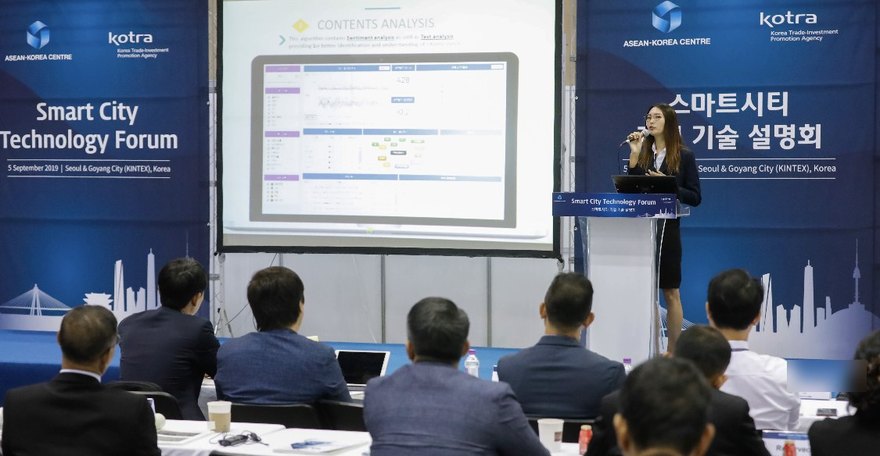
- World Smart City Expo 2019Lecturer · KOTRA · Goyang
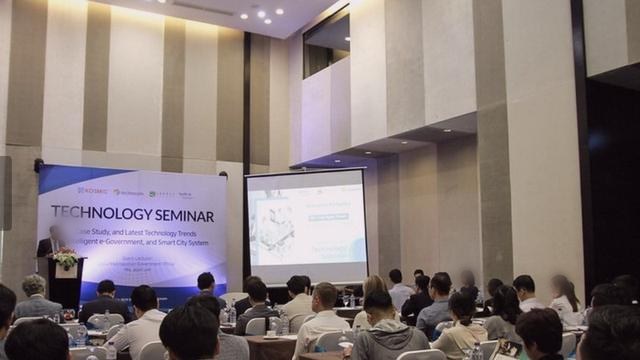
- Seoul—Danang Technology SeminarCo-organiser & moderator · KOTRA · Danang 2019
- Smart Urban Solution Joint-WorkshopLecturer · Seoul Metro. Gov. & African Development Bank · 2019

- Certified ScrumMaster®Scrum Alliance · Dec 2025 — Dec 2027
- AWS Certified Cloud PractitionerAmazon Web Services · 2021
- Google Analytics Individual QualificationGoogle · 2020
- Content Marketing CertificationHubSpot Academy · 2019
Tools & Languages
AI Tools
- Claude
- ChatGPT
- Gemini
- Claude Code
- Cursor
- Codex
- NotebookLM
- Copilot Studio
Product & Design
- Demo with prototype
- Field research
- Customer interviews
- Service planning
- Screen design
- Figma
- Axure
- Jira
- Confluence
- Notion
- Trello
Technical
- HTML
- CSS
- JavaScript
- React
- SQL
- Python
Languages
- Korean — native speaker
- English — full professional proficiency
Markets Delivered For
- Singapore
- Thailand
- Philippines
- Korea
- Uganda
- + 15 LG.com markets
Worked On Site In
- China
- Cambodia
- Vietnam
- Philippines
- Singapore
- Uganda
- Armenia
Questions I Get Asked
Are you willing to relocate?
Yes — and I have done it before. I lived and worked on site in China and Cambodia, and have run projects on the ground in Vietnam, the Philippines, Singapore, Uganda and Armenia. Moving for work is a known quantity rather than a leap.
Singapore is where I have the deepest footing — business development in the market since 2018 and delivery into it for Hyundai — but the deciding factor is the project, not the postcode. I am open to roles across Asia-Pacific, Europe and the Middle East. I hold a Korean passport and would need visa sponsorship.
What kind of roles are you looking for?
Senior Product Owner or Product Manager in mobility, commerce or platform work — particularly anything that has to land in more than one market, and increasingly anything with AI at its centre. I am currently the product owner on an agentic-AI city super app, and I hold the coursework for a master’s in AI and big data.
Payments are the thread running through the commerce side of that work. Every market I have delivered into came with its own payment methods and its own integrations with banks and financial institutions, specified market by market rather than inherited. I have not worked inside a financial institution, so I would not present myself as a fintech specialist — but it is the direction I would like to move toward, and the surface is one I already know from the product side.
In any of these, I am most useful where the product touches existing operations rather than sitting on its own — and where someone has to decide what a model is actually allowed to do.
How much of your AI experience is hands-on?
It started in 2025 on Busan's autonomous mobility programme — the first time the product I owned sat on top of a physical AI system rather than beside one. The data governance portal followed, where the question was whether people could find data they trusted well enough to build on. Since then I have been product owner on an agentic-AI city super app, which puts me at the centre of both sides: the physical AI that moves vehicles through a city, and the software AI that decides what to say to a citizen and when.
Alongside that I have completed the coursework for a master's in AI and big data and am building the capstone — an evaluation framework for context-aware transit agents — plus two AI projects of my own. What I bring on top of the tooling is thirteen years of deciding whether a system's output is good enough to put in front of a user, which turns out to be the hard part of AI product too.
Why can I only see one full case study?
Most of my work has been for enterprise and government clients under confidentiality, so screens and figures cannot go on a public site. I write up what I can — the decisions, the trade-offs, what went wrong — and I am happy to walk through the rest in detail in conversation.